






Introduction: Most Startups Don’t Worry About Trademarks—Until It’s Too Late
When you start a business, trademark registration is rarely at the top of your list.
You’re busy choosing a name, launching a website, talking to customers, figuring out marketing, and trying to get traction. Legal protection feels like something you can “handle later.”
That’s usually fine—until it isn’t.
Many startups only think about trademarks when a competitor starts using a similar name, a marketplace flags their brand, or they receive a legal notice asking them to stop using the identity they’ve already built.
By then, fixing the problem is expensive, stressful, and disruptive.
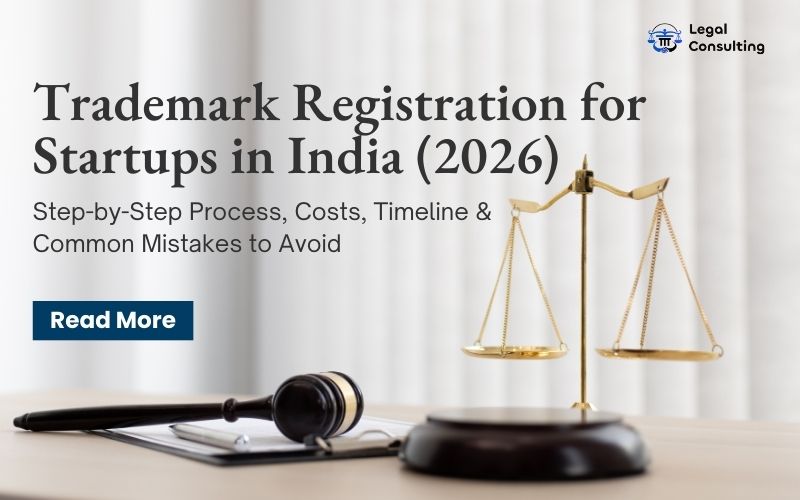
This guide explains trademark registration for startups in India in a clear, practical way—how the process works, what it costs, how long it takes, and the mistakes founders should avoid in 2026 if they want to protect their brand properly.
What is a Trademark?
A trademark is not just a legal formality.
It’s the legal ownership of your brand identity.
Your brand name, logo, tagline, or product name becomes valuable the moment customers start recognizing it. A trademark ensures that recognition belongs to you—not to anyone who decides to copy it.
In practical terms, trademark registration gives you:
- Exclusive rights over your brand across India
- Legal authority to stop copycats
- A stronger position with investors and partners
For startups, trademarks are a core part of intellectual property rights, and they often come up during funding, acquisitions, and expansion discussions.
™ vs ® — What Founders Often Get Wrong
- ™ can be used once you file a trademark application
- ® can only be used after the trademark is officially registered
Using ® without approval is not allowed and can attract penalties.
Why Registering a Trademark Early Saves Startups From Bigger Problems
One pattern shows up again and again with startups.
They delay trademark registration because:
- the business is still small,
- revenue hasn’t stabilized,
- or they assume nobody will copy them.
Unfortunately, growth is exactly what attracts imitation.
Startups without trademark protection often face:
- competitors launching with confusingly similar names,
- disputes over domain names or social media handles,
- legal notices during expansion,
- or forced rebranding after months (or years) of marketing effort.
Registering your trademark early:
- protects your brand nationwide,
- prevents future disputes,
- strengthens investor confidence,
- and saves you from expensive rebranding later.
It’s one of the simplest ways to reduce long-term legal risk.
Step-by-Step Trademark Registration Process in India
Trademark registration isn’t complicated—but it is procedural. Missing a step or filing incorrectly can slow things down significantly.
Here’s how the process works.
Step 1: Trademark Search
Before filing anything, you need to check whether a similar trademark already exists. This helps avoid rejection and future disputes.
Skipping this step is one of the most common mistakes startups make.
Step 2: Selecting the Right Trademark Class
India follows a classification system where trademarks are registered under specific classes based on the nature of goods or services.
Choosing the wrong class can mean your trademark doesn’t actually protect your business.
Step 3: Preparing the Documents
This includes identity proof, business registration details, and brand assets such as logos or wordmarks.
Accuracy matters here—small errors often cause objections later.
Step 4: Filing the Trademark Application
The application is filed online with the government trademark office.
Once filed, you can start using the ™ symbol.
Step 5: Examination by the Trademark Office
The authorities review the application for legal issues or conflicts with existing trademarks.
Step 6: Objection or Opposition (If Raised)
If objections arise, a formal response must be submitted within strict deadlines.
Many applications get delayed here due to improper replies.
Step 7: Trademark Registration Certificate
Once approved, the trademark is registered and you can legally use ®.
Most delays and rejections happen between examination and objection handling—careful filing makes a big difference.
Trademark Registration Cost for Startups in India
Trademark registration is relatively affordable. The real cost usually comes from mistakes, not fees.
Government Fees (Approximate)
- Individual / Startup / MSME: ₹4,500 per class
- Company: ₹9,000 per class
Professional or Legal Fees
- Typically range between ₹3,000 and ₹10,000+, depending on complexity
Total Expected Cost
Most startups spend ₹8,000–₹18,000 per trademark class.
While self-filing can reduce initial expenses, incorrect applications often lead to objections, re-filing, or legal responses—raising overall costs later.
How Long Trademark Registration Actually Takes
Trademark registration is not instant approval.
In most cases:
- Filing acknowledgment is immediate
- Examination takes around 4–6 months
- Publication period lasts 4 months
- Final registration usually completes within 12–18 months
You can continue using ™ during this period, but full legal protection comes only after registration.
Documents Required for Trademark Registration
Keeping documents ready speeds things up:
- Applicant identity proof
- Business registration certificate
- Brand logo or wordmark
- Address proof
- Power of attorney (if filed through a professional)
- MSME certificate (optional but helpful)
Incomplete or incorrect documentation is a common cause of unnecessary delays.
Why Trademark Applications Get Rejected (And How Startups Can Avoid It)
Most trademark rejections are avoidable.
The most common reasons include:
- similarity with existing trademarks,
- overly generic or descriptive brand names,
- incorrect trademark class selection,
- errors in applicant details,
- missing response deadlines,
- restricted words,
- or incomplete documentation.
A careful review before filing eliminates most of these issues.
Trademark vs Copyright vs Patent — Clearing the Confusion
Many founders mix these protections up.
- Trademark protects your brand identity
- Copyright protects creative work such as content, designs, or software code
- Patent protects inventions or technical innovations
For most startups, trademark registration is the first and most relevant form of protection.
Common Trademark Mistakes That Cost Startups Time and Money
Some mistakes appear repeatedly:
- delaying trademark filing until after growth,
- choosing names too close to competitors,
- registering only a logo instead of the brand name,
- ignoring renewal timelines,
- filing applications without understanding legal requirements.
Each of these can result in disputes, delays, or forced brand changes.
When Professional Trademark Support Makes Sense
Not every application requires legal help—but professional guidance is strongly recommended when:
- objections or oppositions are raised,
- multiple trademark classes are involved,
- brand expansion is planned,
- or legal certainty is required before funding.
Expert support improves approval chances and reduces long-term risk.
Frequently Asked Questions
Is trademark registration mandatory for startups?
No, but it is highly recommended to protect your brand.
Can I use ™ without registration?
Yes, once the application is filed.
How long is a trademark valid?
Ten years, with unlimited renewals.
Can someone oppose my trademark application?
Yes, during the publication stage.
Can startups file trademarks without a lawyer?
Yes, but professional review reduces mistakes and delays.
Final Thoughts: A Trademark Is Protection, Not Paperwork
Your brand represents trust, effort, and long-term value.
Losing it because of a preventable legal issue can undo years of hard work. Trademark registration gives your startup ownership, clarity, and peace of mind as you grow.
If you’re unsure about filing, class selection, or handling objections, early legal guidance can save time and prevent costly corrections later.